
Travelling With a Small Dog by Car, Safely and Calmly
Luke Iles – Uploaded 17.04.2026

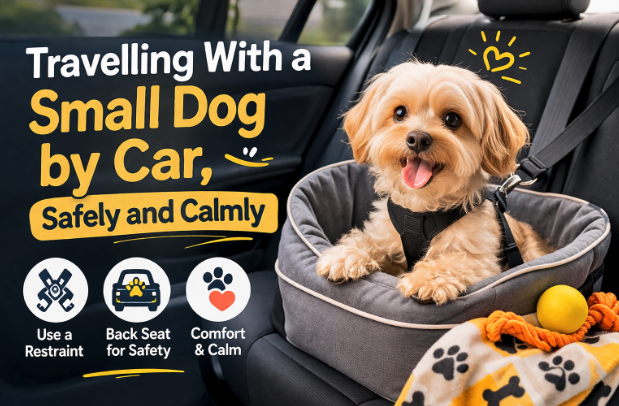
Keeping a small dog safe in the car worries most owners.
A loose pet can distract you in seconds. Under Highway Code Rule 57, dogs must be suitably restrained, so a small-dog-car-seat or similar restraint matters on every trip.
A few smart choices make any journey calmer.
Start with the safest setup for your small dog
A dog moving around the cabin is dangerous. In a sudden stop, even a tiny breed can be thrown forward. That’s why the back seat is usually best, while the front passenger seat is best avoided because of airbags.
A secured booster seat, carrier, or crash-tested harness usually works best.
Choose a seat, carrier, or harness that fits properly
Fit matters more than looks. Your dog should be able to sit, lie down, turn around, and stay secure. It also shouldn’t leave room to slide about.
Booster seats often suit toy breeds and dogs under roughly 10 to 15 kg. They can help nervous dogs by lifting them up to window level, but comfort isn’t the same as crash protection. For a closer look at options, this UK guide to small dog car safety is a useful starting point.
Secure the restraint correctly before every trip
Always attach the dog to a harness, not a collar. A collar can put dangerous force on the neck if you brake hard.
Then check how the restraint is fixed in place. Some use the seat belt, some use headrest straps, and some use ISOFIX where the maker says it fits. Before you set off, give it a quick tug and check the manual. If it wobbles, fix it first.
Help your dog stay calm and comfortable on the road
Calm dogs travel better and distract you less. Start with a few minutes in the parked car, then try short drives before longer journeys. Treats, praise, and a familiar blanket can make the car feel less strange.
Some dogs also get travel sick, especially puppies. So skip a large meal right before leaving, and keep fresh water handy.
Pack the simple things that make a big difference
Bring water, poo bags, wipes, a lead, a towel, and up-to-date ID details. On longer trips, stop about every two hours if you can. Those breaks help with toilet needs, stretching, and stress.
Know the UK rules and the mistakes to avoid
The law is simple, but people still get caught out. If your dog isn’t suitably restrained, police may link it to careless driving, with fines reported up to £5,000.
Never let a small dog roam free or ride on a lap
Lap travel feels cosy, but it’s unsafe. Your dog can interfere with steering, block your view, or be crushed by an airbag. Don’t let dogs hang out of windows either, because debris and sudden turns can cause injury.
Do not leave your dog alone in a hot car
Even mild weather can turn a car dangerously fast. Leaving a dog inside can amount to neglect.
Safe travel comes down to three things, restraint, comfort, and planning ahead. Fit the right setup well, pack for the journey, and your small dog car seat or other restraint will make every trip safer and less stressful.
Conclusion
Travelling with a small dog by car doesn’t have to be stressful when you focus on safety, comfort, and preparation. Using the right restraint, placing your dog in the back seat, and helping them stay calm can make every journey smoother for both of you. Simple steps like packing essentials, taking regular breaks, and avoiding risky habits such as lap travel or leaving your dog in a hot car can prevent serious problems. With the right setup and a little planning, you can turn car trips into a safe and enjoyable experience for your small dog.
FAQs
1. Is it safe to travel with a small dog in the car?
Yes, it can be safe if your dog is properly restrained. A loose dog can distract the driver and become dangerous during sudden stops. Using a dog car seat, carrier, or harness helps keep both you and your pet safe.
2. Where should a small dog sit in the car?
The back seat is the safest place for a small dog. The front seat should be avoided because airbags can seriously injure your pet in an accident.
3. Do I need to restrain my dog while driving?
Yes, it’s important. According to UK rules, dogs must be suitably restrained in a vehicle. This helps prevent accidents and keeps your dog protected during sudden braking.
4. What is the best way to restrain a small dog in the car?
You can use a booster seat, carrier, or a crash-tested harness. The best option depends on your dog’s size and comfort, but it should always keep them secure without restricting movement.
5. Should I attach the seat belt to my dog’s collar?
No, never use a collar. Always attach restraints to a harness. A collar can cause serious neck injuries if you stop suddenly.
6. How can I make my dog feel calm during car travel?
Start with short trips and let your dog get used to the car slowly. Bring familiar items like a blanket, and use treats and praise to create a positive experience.
7. Why do some dogs get car sick, and what can I do?
Puppies and some dogs can feel sick during travel. Avoid feeding a large meal right before the trip, and make sure your dog has access to fresh water.
8. What should I pack when travelling with my dog?
Carry essentials like water, poo bags, wipes, a lead, a towel, and updated ID details. These small items can make the journey much easier and stress-free.
9. How often should I stop on a long car journey with a dog?
It’s best to take a break every two hours. This allows your dog to stretch, go to the toilet, and relax.
10. Is it okay to let my dog sit on my lap while driving?
No, it’s not safe. A dog on your lap can distract you, block your view, and become seriously injured in case of an accident.
Read Travel Blogs & More
Disclosure: Some links in this article may be affiliate links, which can provide compensation to HandL Blogs at no cost to you if you decide to purchase through these links. These are products we have personally used and stand behind. This site is not intended to provide financial advice and is for entertainment only. You can read our affiliate disclosure in our privacy policy.

Luke Iles
Luke is a leading travel writer within the travel niche and is also a co-founder of HandL Blogs one of the UK’s leading travel blogging websites. Luke has a love of all things travel.
Initially becoming friends with his other co-founder, Harry, at the age of four years old, they let their love for travel evolve, making it their mission to visit every country in the world!
Today they want to share their passion and experiences of travelling across the globe with written blogs on topics that are most important to them. From travel, cooking, fitness and tech blogs!
Whether that be trying new food in a new country and sharing it in a cooking blog; visiting a new gym in a certain city and reviewing it in a fitness blog or learning about the newest tech within the travel industry.
Disclosure: Some links in this article may be affiliate links, which can provide compensation to HandL Blogs at no cost to you if you decide to purchase through these links. These are products we have personally used and stand behind. This site is not intended to provide financial advice and is for entertainment only. You can read our affiliate disclosure in our privacy policy.