
Top 5 QA Testing Tools for Modern Software Development Teams
Luke Iles – Uploaded 23.02.2026


Finding the right qa testing tools can make or break your development team’s velocity and code quality. Modern software development faces unique challenges: maintaining test scripts as applications evolve rapidly, achieving comprehensive test coverage across multiple environments and browsers, and balancing automated testing with manual oversight without burning through your budget.
These challenges make choosing specialized qa testing tools more critical than ever before. We’ve worked with dozens of development teams transitioning from manual to automated testing, and the difference between generic solutions and purpose-built platforms is stark.
This guide breaks down the top 5 qa testing tools that actually deliver results for software development teams, based on real user feedback and proven track records.
Our research approach for this ranking
Each option was evaluated using publicly available information: user reviews from G2 and Capterra, case studies, feature details from review platforms and directories, plus official website documentation. Only tools with a proven track record in software development environments made the cut, with verification through multiple review sources and real-world adoption data.
-> See our full research breakdown
- Functionize – Best for AI-powered autonomous test automation
- Selenium – Best for Enterprise-scale cross-browser automation
- Playwright – Best for Modern web app end-to-end testing
- Katalon Studio – Best for Multi-platform automation with minimal coding
- Cypress – Best for Modern web app end-to-end testing
Why Top 5 QA Testing Tools For Modern Software Development Teams Matter for Your Business
The right testing tool directly impacts your development cycle speed and software quality. Most teams struggle with maintaining test scripts that break every time the application changes, plus achieving meaningful test coverage across different browsers, devices, and environments without dedicating entire sprints to test maintenance.
Generic testing approaches often miss software-specific nuances like handling dynamic web elements, managing test data across environments, or integrating smoothly with CI/CD pipelines. Specialized qa testing tools understand these pain points and build features specifically to address them.
When you pick the right solution, you’ll see measurable improvements in test coverage percentage (often jumping from 30-40% to 80%+), faster test execution times, and higher defect detection rates before code hits production. That translates to fewer emergency fixes and more predictable release cycles.
Top 5 QA Testing Tools For Modern Software Development Teams Breakdown and Comparison
Note: All data in this table is sourced from review platforms and the official websites of the listed companies.
Company Name | Years Operating | Team Size | Price | Headquartered in | Rating |
|---|---|---|---|---|---|
Functionize | Since 2014 | 51-200 employees | Custom pricing | San Francisco, California, USA | 4.7/5 on G2 |
Selenium | Since 2004 | – | Free (Open Source) | – | 4.4/5 on Capterra |
Playwright | Since 2020 | – | Free (open-source) | Sunnyvale, California, USA | – |
Katalon Studio | Since 2016 | 300-400 employees | Free tier, paid from $135-$229/month | Atlanta, USA | G2 Leader |
Cypress | Since 2015 | 51-100 employees | Free tier, paid from $67/month | Atlanta, Georgia, United States | 4.7/5 on Capterra |
Functionize – Best for AI-powered autonomous test automation
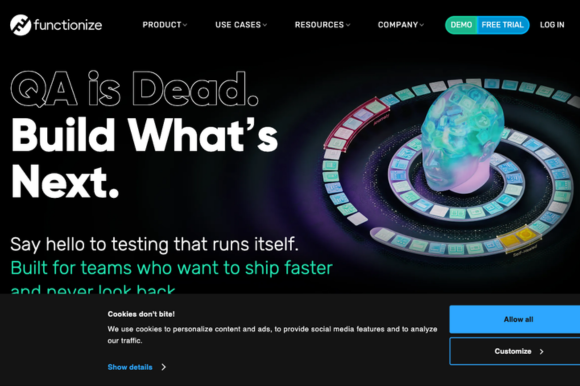
Functionize Key Stats:
- Establishment Year: 2014
- Team Size: 51-200 employees
- Headquartered in: San Francisco, California, USA
- Hourly Rate: Custom pricing
- Key Services/Features Offered: AI-powered test automation, Self-healing tests, Functional testing, Regression testing, End-to-end testing, Cross-browser testing, API testing, Visual regression testing, Natural language processing for test creation, Parallel test execution, CI/CD integration, Test data management, Mobile application testing, Visual testing, Cloud-based test execution
- Awards: Best Corporate Innovation in AI award from AI Summit (2019), AICPA SOC2 certified
- Recognizable Clients: Salesforce, HPE (Hewlett Packard Enterprise), Honeywell, Cigna, Farmers Insurance
- G2 Rating: 4.7/5 on G2
What Does Functionize Do?
We built an AI-native test automation platform that uses machine learning and deep learning to handle the biggest pain point in software testing: constant test maintenance. Our platform lets teams create, maintain, and execute tests without extensive coding knowledge, while our AI automatically adapts tests when applications change. We focus specifically on reducing the 85% of testing time typically spent on maintenance, so development teams can actually focus on building features instead of fixing broken test scripts. Our natural language processing enables non-technical team members to write tests in plain English, democratizing quality assurance across the entire development organization.
Why We Picked Functionize for Top 5 QA Testing Tools For Modern Software Development Teams:
Functionize addresses the core challenge every development team faces: tests that break constantly as applications evolve, eating up developer time with maintenance instead of innovation. Our AI-powered approach with 99.95% element tracking accuracy means tests actually stay functional as your codebase changes, which is pretty revolutionary for teams tired of spending more time fixing tests than writing them.
Summary of Real User Reviews:
Users consistently highlight how much time they save on test maintenance, with many reporting 80%+ reductions in script upkeep. The self-healing capabilities get praised frequently, especially by teams managing large test suites. From what we’ve seen, teams particularly appreciate the natural language test creation feature, since it lets product managers and business analysts contribute to testing without learning complex scripting languages.
Selenium - Best for Enterprise-scale cross-browser automation
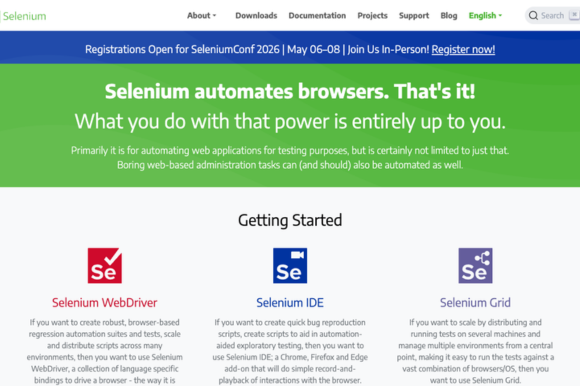
Selenium Key Stats:
- Establishment Year: 2004
- Team Size: –
- Key Services/Features Offered: Selenium WebDriver (cross-browser automation), Selenium IDE (record and playbook testing), Selenium Grid (parallel test execution), Selenium Remote Control (deprecated), Support for Java, Python, C#, Ruby, JavaScript, multi-browser testing, CI/CD integration
- Recognizable Clients: Used by major tech companies including Google, ThoughtWorks, Facebook, eBay, and adopted across 57,000+ companies worldwide
- Capterra Rating: 4.4/5 based on 702 reviews
What Does Selenium Do?
Selenium provides the foundational open-source framework that powers automated web browser testing across the industry. They offer a complete suite including WebDriver for cross-browser scripting, IDE for record-and-playback testing, and Grid for distributed parallel execution. The platform supports multiple programming languages (Java, Python, C#, Ruby, JavaScript) and works across all major browsers and operating systems. Since launching in 2004, they’ve become the de facto standard for web automation, with a massive community maintaining extensive documentation and third-party integrations.
Why We Picked Selenium for Top 5 QA Testing Tools For Modern Software Development Teams:
Selenium solves the fundamental challenge of ensuring web applications work consistently across different browsers and platforms, which is critical for any software reaching diverse user bases. Their open-source model with enterprise-grade capabilities means development teams get powerful automation without licensing costs, plus the flexibility to customize everything for specific needs.
Summary of Real User Reviews:
Teams love Selenium’s flexibility and the fact that it’s completely free, with many praising its multi-language support and extensive community resources. Users consistently mention the steep learning curve for beginners and the need to build additional frameworks for reporting and test management. From what we’ve seen, experienced development teams appreciate the control and customization options, while newer teams sometimes struggle with the initial setup complexity.
Playwright - Best for Modern web app end-to-end testing
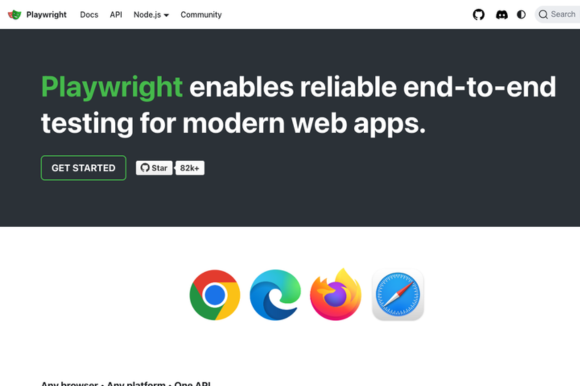
Playwright Key Stats:
- Establishment Year: 2020
- Key Services/Features Offered: End-to-end testing, cross-browser automation, cross-platform testing, API testing, mobile web testing, test recording (codegen), debugging tools, parallel test execution, reporting and analytics
- Recognizable Clients: Adobe Spectrum, Visual Studio Code, React Navigation
What Does Playwright Do?
Playwright delivers a modern testing framework specifically designed for contemporary web applications, with Microsoft backing ensuring long-term stability. They support testing across Chromium, Firefox, and WebKit browsers through a single API, plus provide advanced features like auto-waiting to eliminate flaky tests and time-travel debugging for easier troubleshooting. The platform works with multiple programming languages (JavaScript, TypeScript, Python, Java, .NET) and includes built-in test generation tools that record user interactions and convert them to code automatically.
Why We Picked Playwright for Top 5 QA Testing Tools For Modern Software Development Teams:
Playwright tackles the reliability problems that plague many testing frameworks, especially around timing issues and flaky tests that waste developer time with false failures. Their auto-waiting features and robust browser handling make tests more dependable, which is crucial for CI/CD pipelines where unreliable tests can block deployments unnecessarily.
Summary of Real User Reviews:
Users consistently praise Playwright’s speed and reliability compared to other frameworks, with many highlighting the excellent debugging tools and trace viewer capabilities. The auto-waiting functionality gets mentioned frequently as a game-changer for reducing test maintenance. Honestly, most feedback centers on how much more stable their tests became after switching from other tools, though some teams note the learning curve for the code-first approach.
Katalon Studio - Best for Multi-platform automation with minimal coding
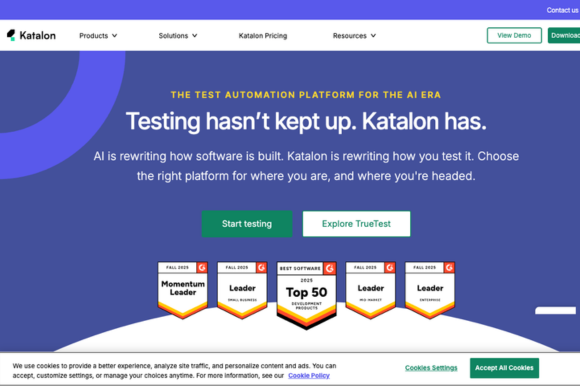
Katalon Studio Key Stats:
- Establishment Year: 2016
- Team Size: 300-400 employees
- Headquartered in: Atlanta, USA
- Hourly Rate: Free tier available, paid plans from $135-$229/month per user
- Key Services/Features Offered: Test automation platform, web testing, mobile testing, API testing, desktop testing, no-code/low-code test creation, cross-browser testing, AI-powered test authoring (StudioAssist), CI/CD integration, test execution engine (Runtime Engine), cloud execution (TestCloud), centralized analytics (TestOps), AI-native regression testing (TrueTest)
- Awards: Gartner Visionary for AI-Augmented Software Testing Tools 2025, Gartner Peer Insights Customers’ Choice 2019-2020, G2 Leader in Software Testing and Automation Testing 11 consecutive quarters, Deloitte Technology Fast 500 #111 in 2024, Deloitte Technology Fast 500 #46 in 2023, 37 G2 badges 2025 Summer Report
- Recognizable Clients: Fortune Global 500 companies including PwC, KPMG, Abbott, Standard Chartered; trusted by 30,000+ QA and DevOps teams across 80+ countries, 55 Fortune 500 companies
- G2 Rating: G2 Leader; 11 consecutive quarters of G2 Leader recognition
What Does Katalon Studio Do?
Katalon provides a comprehensive testing platform that covers web, mobile, API, and desktop applications within a single unified environment. They focus on making automation accessible through no-code/low-code interfaces while still supporting advanced scripting for experienced developers. The platform includes AI-powered features like StudioAssist for test creation and TrueTest for regression testing, plus integrates with major CI/CD tools and DevOps workflows. Their approach bridges the gap between manual testers who need easy-to-use tools and automation engineers who require advanced capabilities.
Why We Picked Katalon Studio for Top 5 QA Testing Tools For Modern Software Development Teams:
Katalon addresses the common challenge of teams needing to test across multiple platforms (web, mobile, API, desktop) without managing separate tools and learning curves for each. Their unified platform approach means less tool switching and more consistent testing workflows, which is particularly valuable for development teams working on complex applications with multiple touchpoints.
Summary of Real User Reviews:
Teams appreciate Katalon’s ease of use and the fact that both technical and non-technical team members can create tests effectively. Users frequently mention the comprehensive cross-platform support and strong record-and-playback functionality. Some concerns come up around performance with very large test suites and occasional UI inconsistencies, but overall sentiment remains positive, especially regarding the free tier and reasonable pricing for smaller teams.
Cypress - Best for Modern web app end-to-end testing
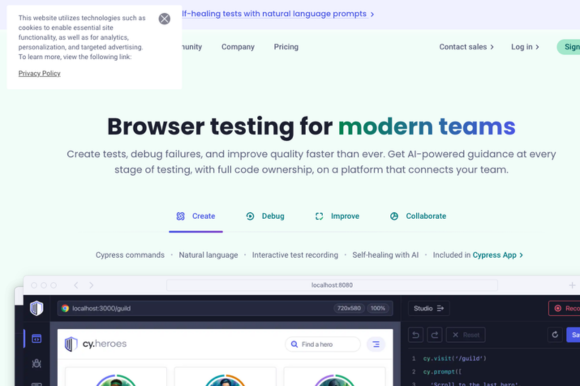
Cypress Key Stats:
- Establishment Year: 2015
- Team Size: 51-100 employees
- Headquartered in: Atlanta, Georgia, United States
- Hourly Rate: Free tier available, Paid plans starting from $67/month or $75/month
- Key Services/Features Offered: End-to-end testing, Component testing, API testing, Integration testing, Unit testing, Cross-browser testing, CI/CD integration, Test parallelization, Test replay and debugging, Accessibility testing, Time-travel debugging, Automatic waiting and retries, Network request interception, Test recording and video/screenshot capture
- Recognizable Clients: Disney, Slack, Netflix, Shopify, PayPal, NBA, GitHub, Wayfair, Betterment, GoFundMe, Twilio, Autodesk, RxSaver
- Capterra Rating: 4.7/5 based on 67 reviews
What Does Cypress Do?
Cypress offers a JavaScript-based testing framework built specifically for modern web development, running tests directly in the browser rather than through external drivers. They provide both open-source testing capabilities and a cloud platform for advanced features like parallelization and analytics. The platform excels at end-to-end testing with real-time feedback, time-travel debugging that lets you step through test execution, and automatic waiting that eliminates timing issues. Their approach focuses heavily on developer experience with intuitive APIs and extensive documentation.
Why We Picked Cypress for Top 5 QA Testing Tools For Modern Software Development Teams:
Cypress solves the debugging nightmare that plagues most testing frameworks by providing unprecedented visibility into test execution through time-travel snapshots and real-time browser interaction. Their JavaScript-first approach aligns perfectly with modern web development workflows, making it easier for front-end developers to write and maintain tests without context switching between different programming paradigms.
Summary of Real User Reviews:
Users consistently praise Cypress for its intuitive interface and powerful debugging capabilities, with many highlighting how much easier it is to troubleshoot failed tests compared to other frameworks. The time-travel debugging feature gets mentioned frequently as a standout capability. Teams do note some limitations around cross-browser support and parallelization requiring paid services, but most agree the developer experience advantages outweigh these constraints for JavaScript-focused development teams.
Our Research Methodology and Selection Process
Initial Data Collection
We started by building a comprehensive list of qa testing tools from major software directories including G2, Capterra, and GetApp, plus industry publications and developer community recommendations. This initial phase captured over 50 potential options, ranging from enterprise platforms to open-source frameworks. We also pulled data from GitHub stars, Stack Overflow discussions, and developer survey results to understand actual adoption patterns in real development environments.
Shortlisting Phase
The longlist was filtered down based on specific criteria: verified user reviews from software development teams, documented case studies with measurable results, and evidence of active development or community maintenance. We removed tools with fewer than 10 verified reviews, platforms that hadn’t been updated in over 12 months, and options without clear software development focus. This phase eliminated roughly 70% of the initial candidates, leaving us with 15 serious contenders.
Verification of Claims
Each remaining option underwent detailed verification where we cross-checked marketing claims against actual user feedback patterns. We analyzed review sentiment across multiple platforms, looked for consistency between advertised features and user-reported capabilities, and verified client testimonials where possible. Tools that showed significant gaps between promises and user experiences were removed from consideration.
Authority and Industry Contribution Layer
We evaluated each platform’s industry standing through awards, recognition from analyst firms like Gartner, contributions to open-source communities, and mentions in reputable software development publications. Companies needed to demonstrate thought leadership, active community engagement, or recognized expertise in the testing automation space to advance to the final evaluation phase.
Top 5 QA Testing Tools For Modern Software Development Teams-Specific Evidence
The final ranking considered platforms with dedicated software development features, proven integration capabilities with common development tools (Jenkins, GitHub, Azure DevOps), and verified success stories from software teams. We prioritized tools showing measurable impact on key development metrics: test coverage improvement, execution time reduction, and defect detection rates. Each finalist needed documented evidence of helping development teams achieve better testing outcomes, not just generic automation capabilities.
How to Choose the Right QA Testing Tools For Modern Software Development Teams
Start by honestly assessing your team’s current testing maturity and technical capabilities. Some tools require significant programming expertise, while others focus on accessibility for non-technical team members.
Consider these key factors:
- Industry/Domain Experience: Look for platforms with proven success in your specific type of application (web, mobile, API) and development stack. Generic tools often miss nuances that matter for your particular environment.
- Features and Service Offerings: Match capabilities to your actual needs. Do you need cross-browser testing, API testing, mobile support, or AI-powered maintenance? Don’t pay for features you won’t use, but ensure core requirements are covered.
- Pricing Structure: Factor in both direct costs and hidden expenses like training time, maintenance overhead, and integration effort. Free tools might cost more long-term if they require extensive custom development.
- Results Measurement: Choose platforms that provide clear metrics on test coverage, execution time, and defect detection rates. You need visibility into whether your testing investment is actually improving software quality.
- Industry Knowledge and Compliance: Ensure the platform understands software development workflows, integrates with your existing CI/CD pipeline, and supports compliance requirements relevant to your industry.
Bottom Line
Choosing the right qa testing tools directly impacts your development team’s velocity and software quality. The platforms we’ve covered each excel in different areas: AI-powered automation, enterprise-scale flexibility, modern web testing, multi-platform coverage, and JavaScript-focused development.
Your specific needs around technical expertise, budget, and testing complexity should guide the decision, but any of these five options will significantly improve your testing capabilities compared to manual approaches or generic automation tools.
The testing landscape continues evolving rapidly, so partnering with a platform that invests in innovation will serve you better long-term. Ready to take your software development to the next level? Get started to see how the right partner can accelerate your growth.
Read Travel Blogs and More
Disclosure: Some links in this article may be affiliate links, which can provide compensation to HandL Blogs at no cost to you if you decide to purchase through these links. These are products we have personally used and stand behind. This site is not intended to provide financial advice and is for entertainment only. You can read our affiliate disclosure in our privacy policy.

Luke Iles
Luke is a leading travel writer within the travel niche and is also a co-founder of HandL Blogs one of the UK’s leading travel blogging websites. Luke has a love of all things travel.
Initially becoming friends with his other co-founder, Harry, at the age of four years old, they let their love for travel evolve, making it their mission to visit every country in the world!
Today they want to share their passion and experiences of travelling across the globe with written blogs on topics that are most important to them. From travel, cooking, fitness and tech blogs!
Whether that be trying new food in a new country and sharing it in a cooking blog; visiting a new gym in a certain city and reviewing it in a fitness blog or learning about the newest tech within the travel industry.
Disclosure: Some links in this article may be affiliate links, which can provide compensation to HandL Blogs at no cost to you if you decide to purchase through these links. These are products we have personally used and stand behind. This site is not intended to provide financial advice and is for entertainment only. You can read our affiliate disclosure in our privacy policy.